
Is AI Weakening Our Cognitive Abilities?
"They will come to love their oppression, to adore the technologies that undo their capacities"
– Aldous Huxley
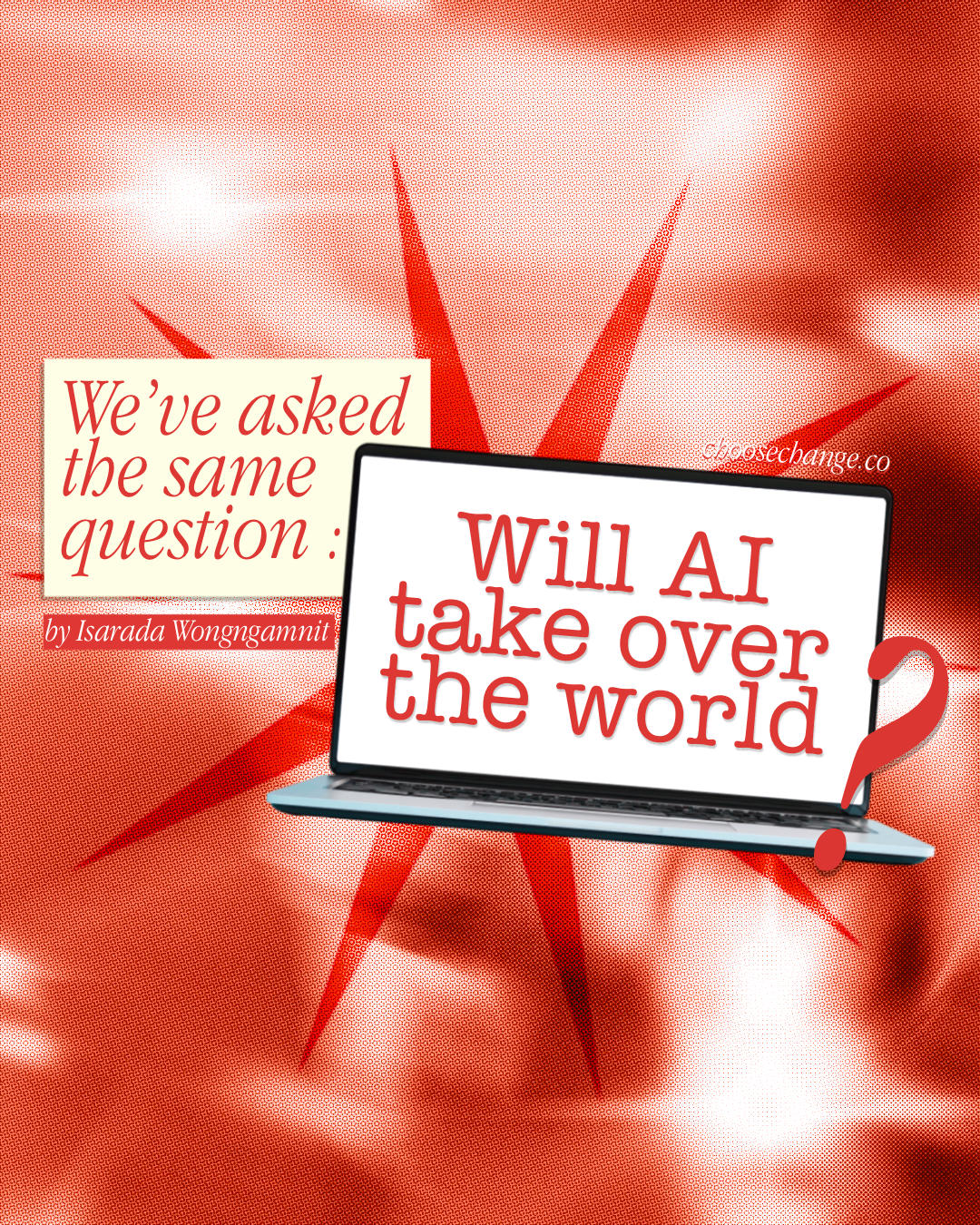
Humans need to figure out how to stay relevant. We’ve asked the same question: will AI take over the world? Analysts predict AI and robotics will eventually outperform humans in most tasks. However, the real danger isn’t AI replacing humans - it’s humans forgetting how to think.
What is cognitive offloading in AI?
Humans have always relied on tools to reduce mental effort, such as calculators, calendars, and GPS navigation. These are all examples of cognitive offloading. AI represents the next stage in taking over complex cognitive tasks. It takes this to a new level - moving beyond mere data storage and predictive insights. However, while using AI to handle tasks frees up your mental energy, overreliance becomes a major problem. When you depend on AI too much, you lose the ability to think of original ideas.
Which cognitive abilities are being replaced?
Human body has a rule: if you do not use it, you will lose it. AI affects several core cognitive functions, such as:
- Creativity: AI can generate images, music, stories, and designs within seconds. Excessive dependence can reduce the ability to think creatively.
- Attention: Overreliance on AI shortens attention span. For example, instead of analyzing a long article, you can just ask AI to summarize it. Because AI provides immediate answers, you don’t build and maintain mental endurance.
That is why you should use artificial intelligence as an assistant and not as a replacement.
Maintaining human cognitive skills
It is up to you to keep your brains sharp. You need to pay attention to tasks you hand over to AI and make sure you aren’t letting technology do so much of the work that you stop actively learning. Avoid cognitive offloading or the habit of letting AI do all the thinking. Instruct your AI to act like a tutor, and treat it like an assistant. Never ask an AI to generate an idea or draft until you’ve actually brainstormed.
AI is a powerful tool for efficiency, but overreliance can turn it into a threat to human intellect. Cognitive offloading is the act of delegating mental tasks. Humans have always used tools to free up working memory, but AI pushes this boundary. Examples of cognitive skills affected are creativity and attention span. To avoid this, stop blinding accepting AI outputs or letting the machine do your mental thinking.
Sources
- "Cognitive Offloading in the Age of Artificial Intelligence." PubMed Central, U.S. National Library of Medicine, https://pmc.ncbi.nlm.nih.gov/articles/PMC12678390/.
- "AI, Job Skills, and Critical Thinking." Monitor on Psychology, American Psychological Association, https://www.apa.org/monitor/2026/07-08/ai-job-skills-thinking.
- "Artificial Intelligence and Human Cognitive Abilities." Societies, MDPI, https://www.mdpi.com/2075-4698/15/1/6.