
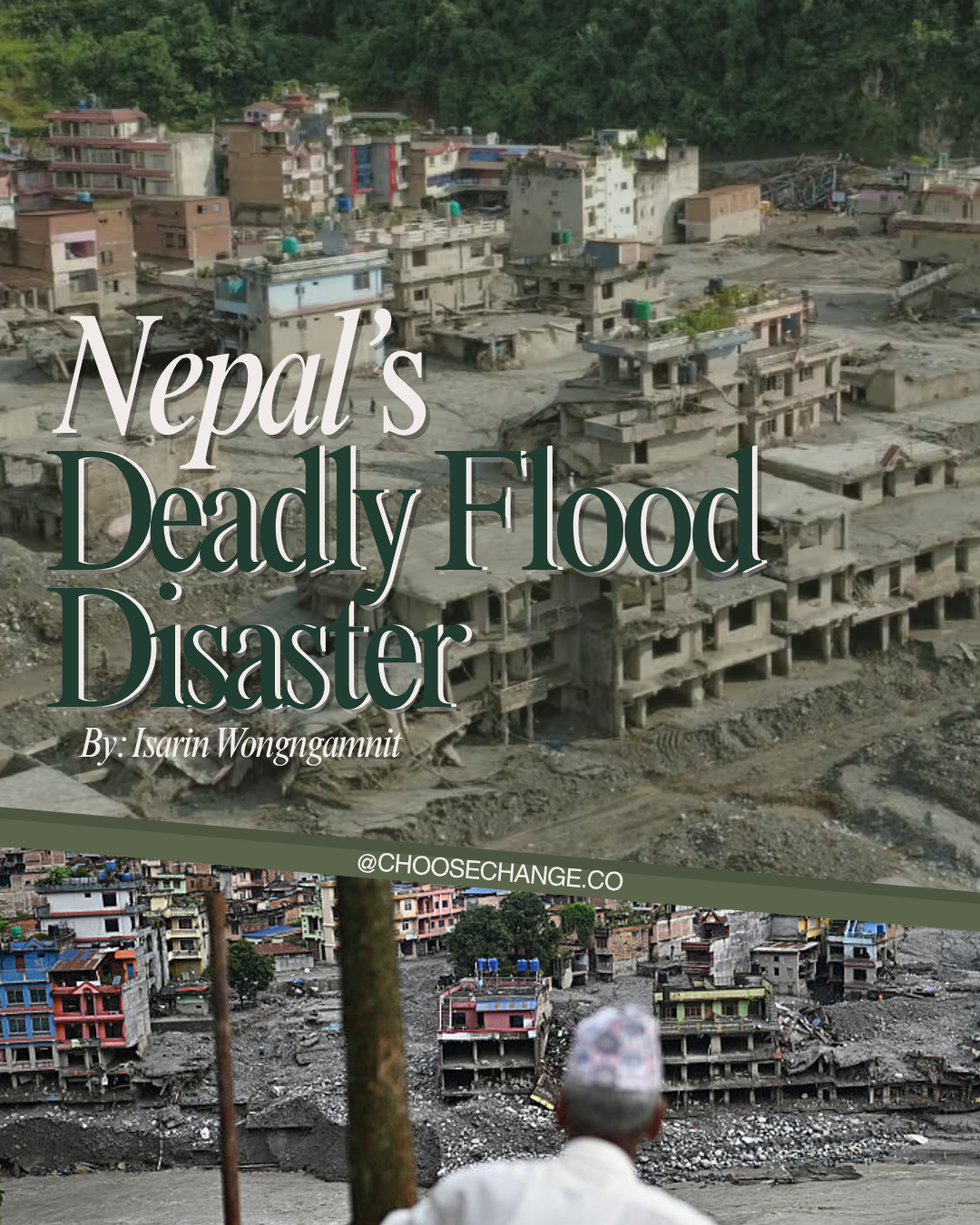
In late August 2026, Nepal experienced one of the deadliest natural disasters in its history when catastrophic flooding swept through villages, roads, bridges, and hydropower stations in the Himalayan region. The disaster claimed over 1,400 lives, left more than 6,000 people missing, and displaced thousands of families across Nepal and neighbouring Tibet. Weeks later, rescue and recovery efforts are still ongoing as communities continue searching for missing loved ones.
A Catastrophe Begins in the Himalayas
The disaster began on 26 August 2026 when a massive section of glacier and rock measuring roughly 200,000 square metres fell from Langtang Lirung mountain in Nepal’s Himalayas. The enormous rock and ice avalanche collapsed into the valley below, releasing millions of cubic metres of debris into the Lhende Khola and Trishuli River.
This triggered flash floods on an almost unprecedented scale, hitting communities, destroying settlements, highways, bridges, and hydropower facilities downstream without warning. Scientists said the collapse generated seismic waves comparable to a magnitude 5.2 earthquake, highlighting the immense force of the landslide and flood.
Lives Lost And Thousands Missing
The flood left widespread devastation across northern and central Nepal. Entire villages were buried beneath mud, rocks, and debris, while roads connecting remote mountain communities were washed away.
As of mid-September 2026:
- More than 1,400 people have been confirmed dead.
- Over 6,000 people remain missing, including hydropower workers and foreign nationals.
- More than 11,000 people have been rescued from flooded communities and isolated mountain regions.
Many victims have not yet been identified because bodies were buried under thick layers of debris. Authorities have collected thousands of DNA samples as families continue waiting for news of missing relatives.
The Climate Crisis, a Major Destabilising Factor
Scientists say climate change was not the sole cause of the disaster, but it was a major destabilising factor that made the collapse more likely and more severe. According to a report by World Weather Attribution, human-caused global warming has thinned Himalayan glaciers and thawed mountain permafrost — permanently frozen ground that helps hold steep mountain slopes together. As temperatures rise, this frozen ground weakens, making glaciers and rocky cliffs increasingly unstable.
Researchers found that global heating likely contributed to the collapse of the overhanging glacier on Langtang Lirung, triggering the deadly avalanche and flood. July and August 2026 were among the warmest months ever recorded in the Himalayan region, accelerating glacier melt and increasing the risk of landslides and glacial collapses.
“Rock avalanches of this size are rare, with annual frequency estimates of approximately one event this size every 1,000–10,000 years,” the study said. “This event shows that limits to adaptation are already being reached.”
However, scientists also warned that climate change was not the only factor. Their analysis suggested that Nepal’s devastating 2015 earthquake may have weakened the mountainside years earlier, leaving cracks in the rock that became more vulnerable over time.
The disaster was the result of a compound crisis, with a number of factors made worse by decades of atmospheric heating as a result of greenhouse gas pollution.
Rescue Efforts Continue
Nepal’s Army, police, and international rescue teams have been working tirelessly to search for survivors using helicopters, drones, excavators, and search dogs. Rescue operations have been made extremely difficult by unstable slopes, damaged infrastructure, blocked river valleys, and thick mud covering large areas.
Hundreds of workers were trapped inside hydropower tunnels when floodwaters rushed through the facilities. While some survivors have been rescued, many workers remain missing as recovery teams continue digging through collapsed tunnels and debris.
The Nepal floods have become one of the country’s worst natural disasters in recent history, causing billions of dollars in damage to homes, infrastructure, and hydropower projects. Beyond the destruction, the tragedy has highlighted the growing risks facing communities living in the Himalayas as glaciers melt and mountain landscapes become increasingly unstable.
How Can We Help
Although the floods happened in Nepal, people around the world can still make a difference.
Support humanitarian organisations. Donate to trusted charities providing food, clean water, shelter, medical supplies, and emergency aid to families affected by the floods.
Raise awareness. Share this post to help more people to spread awareness about the disaster and the challenges faced by the people impacted.
Make sustainable choices. Small actions like reducing waste, saving energy, and lowering carbon emissions can contribute to the global effort to slow climate change.
Sources
- “Climate Crisis Likely Behind Deadly Nepal-Tibet Floods.” The Guardian, 17 Sept. 2026, https://www.theguardian.com/science/2026/sep/17/climate-crisis-likely-behind-deadly-nepal-tibet-floods.
- “Nepal Floods and Climate Change.” Associated Press, 2026, https://apnews.com/article/nepal-floods-climate-change-65ee7e50dfe7914dff37d893a5e6b810.
- “Nepal Flooding and Avalanche Causes.” CNN, 16 Sept. 2026, https://edition.cnn.com/2026/09/16/climate/nepal-flooding-avalanche-causes.
- “Nepal Flood Disaster.” BBC News, 2026, https://www.bbc.com/news/articles/cmlyrzve5pwzo.