
A New Era of Modern Feminism?
Being unapologetically provocative and comfortable in one's own sexuality has become a new form of feminist empowerment, with women distancing themselves from the patriarchal demand for modesty and purity through embracing provocative self-determination and hyper femininity.
Historically, society has degraded traditionally feminine traits, viewing the female body in an objectified lens. In an attempt to reclaim womanhood, feminists have embraced hyperfemininity and an exaggerated form of self expression to promote the idea that being feminine is not inherently weak, submissive, or sexual. Extending on to the embracement of hyperfemininity, feminists argue that true freedom allows women to be fully sexual on their own terms, rejecting the male gaze as the sole arbitrator of their desirability.
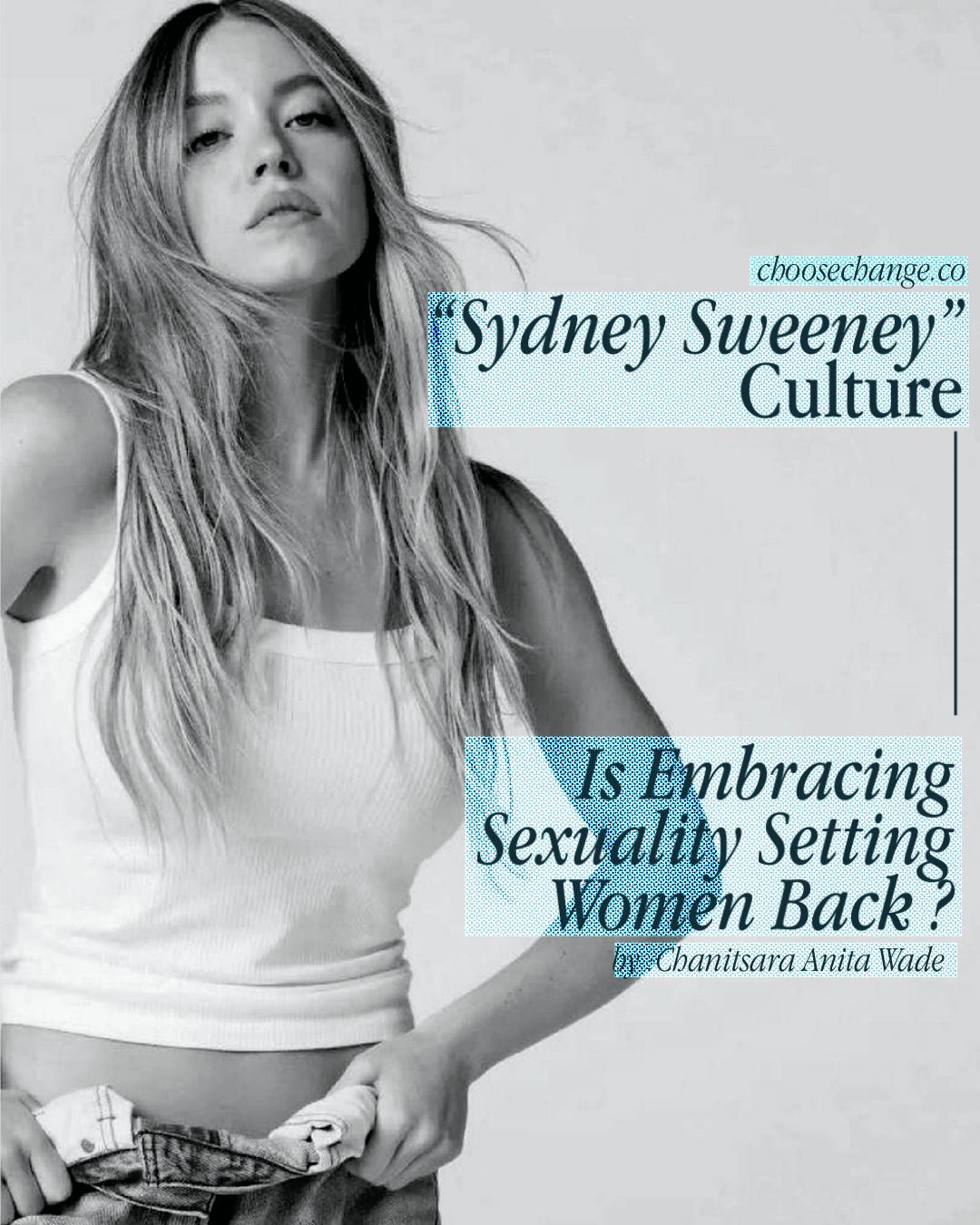
Sydney Sweeney, a prominent actress and producer, reached fame through hit television shows like Euphoria and The White Lotus. Beyond her acting, she cemented her status as a Hollywood "It" Girl through massive commercial success in the romantic comedy Anyone But You, brand partnerships, and a highly relatable public persona.
Sydney Sweeney's most notable and recent brand partnership with American Eagle "Great Jeans" sparked widespread debate by playing on the double entendre of genes and jeans, with the ad focusing on Sydney Sweeney's physical traits with a provocative and sexual lens to draw comparisons to the jeans.
The Male Gaze
The male gaze refers to a way of viewing women that empowers men while reducing women to sexual objects. The term originated from the film industry, wherein films often portray women as passive figures, often overly sexualized or presented provocatively for male pleasure.
Typical examples are female film characters whose main purpose serves to feed the sexual interest or agenda of the male characters through inappropriate clothing, enhanced sexuality and femininity, and often reduced to domestic roles. While they may be shown in a variety of contexts, their primary motivation rests on being an extension of the male leads, "a romantic interest" or "helper."
Feminists critique that male gaze controls the narrative, which is that women are not equal actors in the world. Instead, their agency is reduced to that of an erotic or supporting object, with their value as a person reduced to how it appeals to the male viewer.
How is This Affecting Women?
Self-Objectification: Constant exposure to media constructed for the male gaze causes women to habitually monitor and evaluate their own bodies. Women begin to compare themselves to the exaggerated and oversexualized bodies portrayed on social media and feel inadequate — as if they are "less of a woman" or inherently less deserving of love — when they are not able to meet the stereotypical standards created by the male gaze.
Cognitive Disruption: Because women are conditioned to focus on how they are being perceived, self-objectification can lead to a "desirable" body being achieved through unhealthy means such as starvation and self harm, thus promoting cultures that encourage women to harm themselves in order to preserve an attractive appearance.
Hyper-sexualization of Minors: The normalization of the "Sydney Sweeney" sexualization culture passes down to younger generations, resulting in the pressure to dress and sexualize little girls for pageants, dance teams, and social media content.
Is This Regressing the Feminist Movement?
Undermines Autonomy: Feminism fights for women to have full control over their lives, bodies, and choices. The male gaze reduces women back to passive objects whose primary value is defined by external approval and male desire.
Commercialises Liberation: Media and advertising often rebrand self-determined sexualization as "female empowerment" or a feminist choice, misleading people into believing that performing for the patriarchal gaze is a form of liberation.
Feminists who argue that playing into beauty standards created for the male desire is not an act of liberation are overlooked by a newer, more palatable form of feminism, stalling authentic political progress and masking underlying inequality that continues to encourage patriarchal demands.
Sources
- The Guardian – Sydney Sweeney controversy
- The Humanist – A brief look at the four waves of feminism
- Verywell Mind – What is the male gaze?
- Prindle Institute – Can hyperfemininity be radical?
- Medium (Fourth Wave) – Great Jeans: the dark history behind Sydney Sweeney's viral ad