
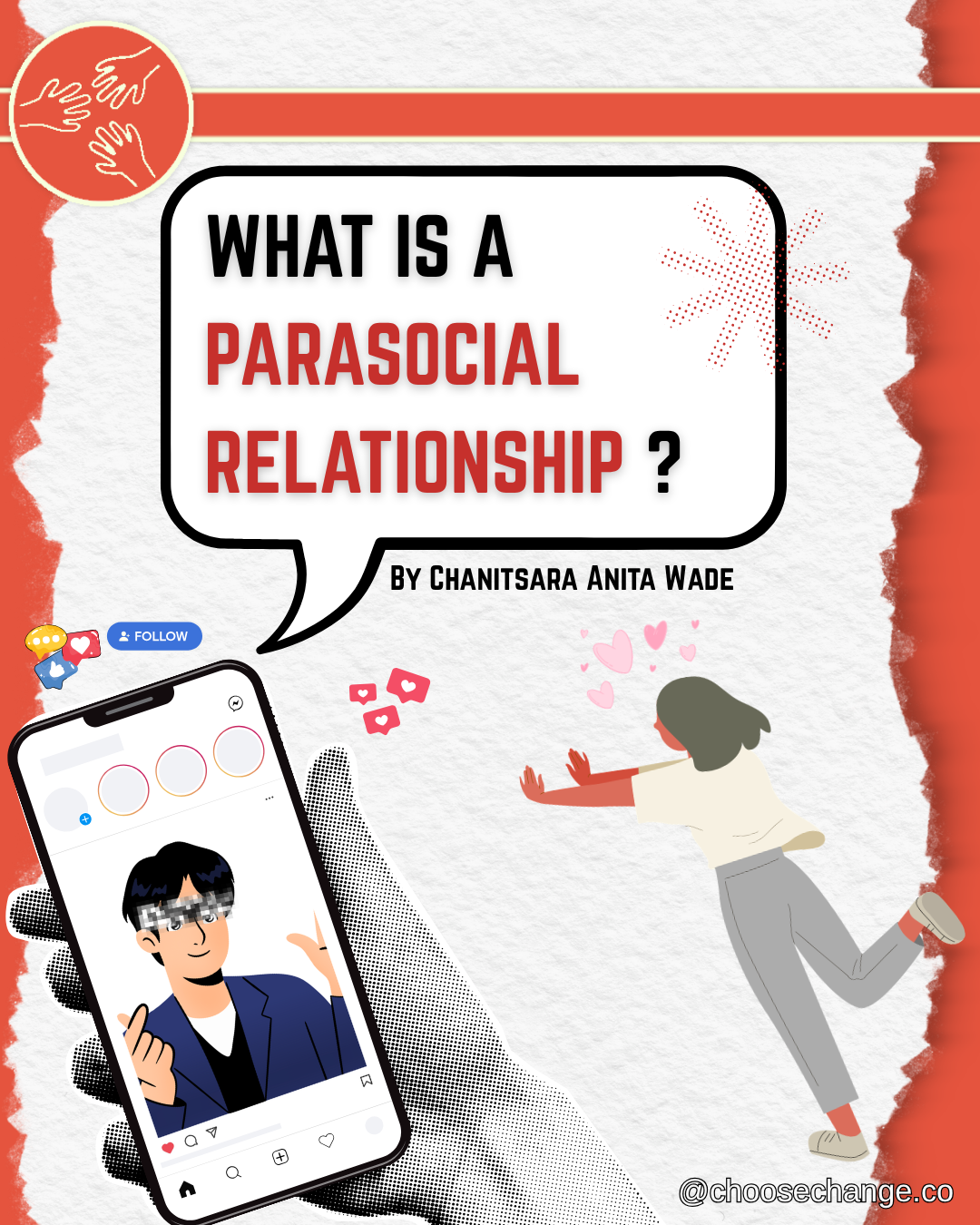
Parasocial relationships are one-sided relationships, where one person develops a strong sense of connection, intimacy, or familiarity and extends emotional energy, interest and time to a person who is unaware of their existence. These relationships exist only in the mind of the individual, who experiences a bond despite the lack of reciprocity.
Parasocial relationships can be formed between celebrities, live-action fictional characters, social media influencers, animated fictional characters, and social media figures they encounter through movies, TV shows, podcasts, or platforms such as Twitter, Instagram, or TikTok.
While many believed parasocial relationships to be inherently unhealthy, newer contemporary research suggests that parasocial relationships may be healthy and is becoming increasingly common amongst media users. Celebrities and influential figures may provide comfort and relatability for the individual, strengthening the person's well-being. However, parasocial relationships may gradually become more consuming for an individual – over time, the individual ceases to maintain their real-life relationships or daily functioning becomes impaired.
How do parasocial relationships between celebrities form?
Parasocial relationships form because the human brain is evolutionarily wired for social connection, making humans attached to and care about people with whom they've had frequent exposure to. From TV shows to books and celebrity interviews, humans are all exposed regularly to tiny details about celebrities and fictional characters, forming an emotional connection that makes viewers feel as if they 'know' the media figure personally. Repeated viewing or interaction with content allows media consumers to develop narratives and expectations around media figures, further strengthening the parasocial bond.
What expectations/idealization comes from parasocial relationships between celebrities?
Because social media allows fans to view intimate moments of a celebrity's life, they often expect a two-sided friendship. When a celebrity fails to respond, some fans feel entitled to their time, leading to anger or a lopsided sense of betrayal.
Audiences often conflate a celebrity's talent or on-screen persona with their entire personality. Fans may expect their idols to be morally flawless, which can lead to severe disillusionment if the celebrity makes a mistake.
In certain industries, such as K-Pop, celebrities are deliberately marketed to appear "accessible" or single. This fosters an expectation among fans that the celebrity is available to them, often resulting in jealousy or intense reactions when a star begins dating someone else or toxic fandom behavior amongst fans with similar parasocial relationships.
How does this affect you psychologically and socially
The Benefits
Parasocial relationships can provide a steady, reliable source of comfort without the risk of real-life rejection or betrayal, helping adolescents form an identity and develop autonomy – by imagining relationships and associating emotions with people at a distance, you are given an opportunity to explore deeply personal values. Admiring a creator, athlete, or character can inspire you to improve personal relationships, learn new things from their experiences, and motivate you to pursue your passion and succeed.
Fandoms and shared interests often allow you to bond with other real-life fans, effectively expanding your actual social circle. Engaging with fans who have similar parasocial relationships temporarily curbs loneliness through shared experiences and connection to the media figure or character.
The Risks
Parasocial relationships may result in developing an unhealthy emotional reliance on the figure, leading to heightened anxiety or distress over the thought of losing the connection. The fear of losing a "special bond" may result in the parasocial relationship becoming a substitute for real-life relationships, leading to isolation from your support network and community. In extreme cases, intense attachment can manifest as media addiction or unhealthy fixation, which may interfere with your daily functioning.
Viewing highly curated, idealized lives on social media can trigger poor self-esteem, jealousy, or a distorted sense of reality when comparing your own lives to theirs or the relationship between the parasocial figure and real-life communities. Immersing yourself in an idealized, one-sided "relationship" can distort your standards for real-life romantic and platonic dynamics, making actual human interactions feel disappointing or underwhelming.
What you can do to safely engage in parasocial relationships
To safely engage in parasocial relationships, regularly maintain active awareness that the connection is fundamentally one-sided, and no matter how close a person feels to a social media figure or character, they do not know you personally. Engage with social media posts whilst acknowledging that social media content is often a curated persona rather than a full reality of the celebrity's life.
Use parasocial relationships as a supplement to social interactions, whether it be through engaging with fandom spaces or the parasocial bond itself. Treat engagement as a form of entertainment rather than an emotional necessity through tracking how much time you spend on their content versus building real-world relationships and limit spending on gifts, donations, or merchandise. Actively invest energy into friends and family who can offer reciprocal support.
Finally, consider what emotional needs the relationship is fulfilling – such as identity exploration or coping with loneliness – and look for ways to meet those needs in your actual life. Communicate with real-life support networks such as friends and family about your needs and how they can help to aid with loneliness.
Sources
- Psychology Today – Parasocial Relationships
- National Register of Health Service Psychologists – Parasocial Relationships: The Nature of Celebrity Fascinations
- Verywell Mind – What is a Parasocial Relationship?
- The University of Texas Permian Basin – The Positives and Negatives of Parasocial Relationships: When Fandom Goes Too Far
- Cerebral – Parasocial Relationships: The Nature of Celebrity Fascinations in the Digital World
- UCLA Health – How can Parasocial Relationships Affect Your Mental Health?
- Harvard Health – Do Parasocial Relationships Fill a Loneliness Gap?
- National Library of Medicine – People perceive parasocial relationships to be effective at fulfilling emotional needs
- Cleveland Clinic – Friend or Faux: Are Parasocial Relationships Healthy?