
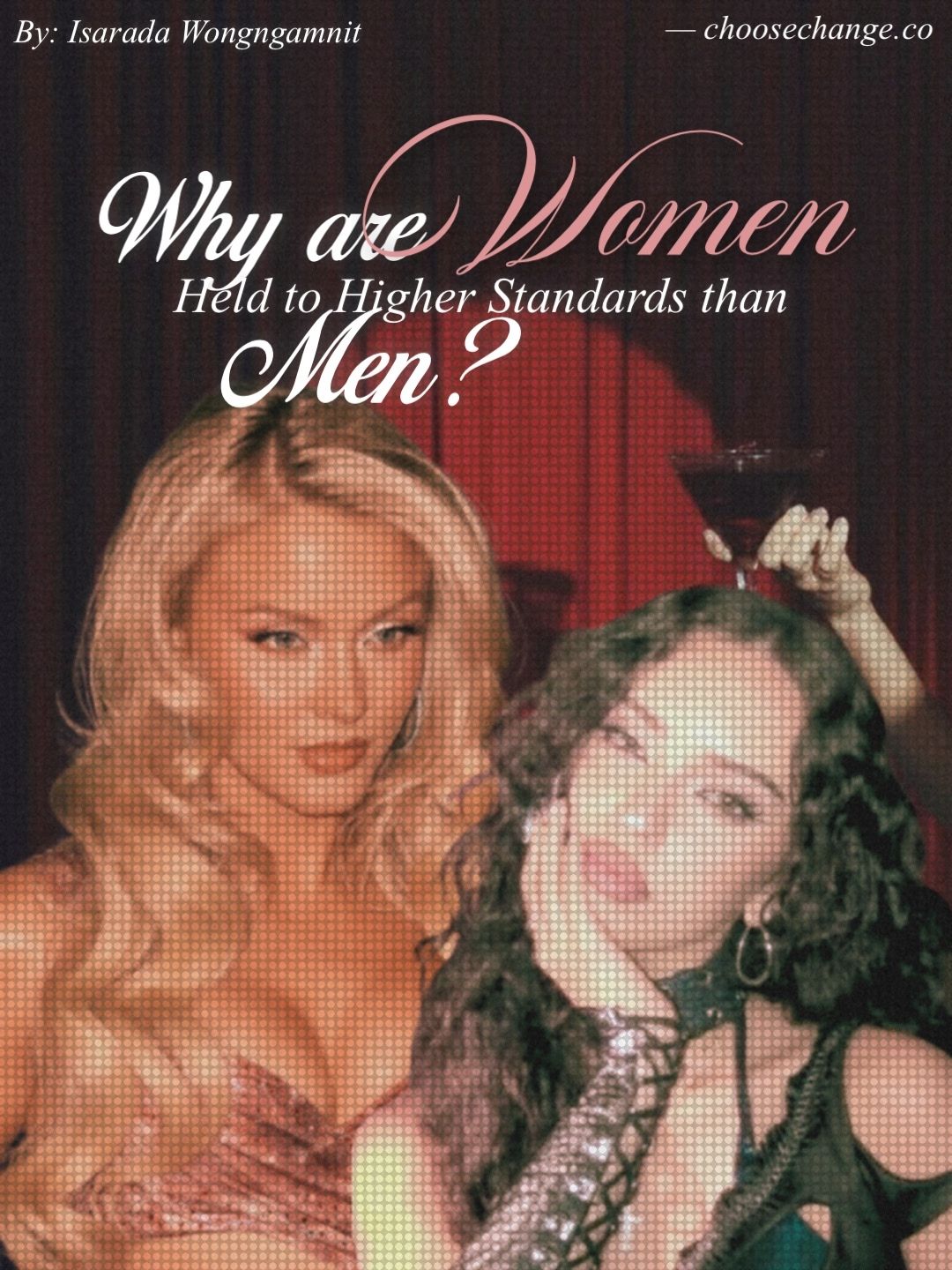
Zara Larsson faced backlash after reposting content involving generative AI. KATSEYE’s Daniela was criticized online for supposedly “overdancing” during performances. It seems that every week, social media finds a new woman to hate on.
At the same time, some male celebrities continue to enjoy thriving careers despite being associated with far more serious controversies. Chris Brown, who pleaded guilty in 2009 to assaulting Rihanna, received a Grammy nomination this year. Kanye West has faced multiple controversies, including being sued over allegations of sexual assault, making repeated antisemitic statements, and releasing music that praised Nazism, which contributed to Australia revoking his visa. Yet he continues to have a devoted fan base, and many supporters continue to defend him.
Sexual Objectification
In a study, participants rated a series of photographs featuring well-known male and female athletes, some of whom were depicted in a sexualized manner. The sexualized targets were perceived as more attractive but less competent compared to the non-sexualized targets. Notably, the sexualization effects were higher for female targets. These findings have significant implications within the context of objectification theory. Sexual objectification: treating a person as a mere body or a collection of body parts. This practice contributes to the general assumptions about women, portraying them as sexual objects and influencing gender norms in the celebrity world.
Unrealistic Expectations
The objectification and sexism women face in the media have profound consequences. The contradictory expectations placed on female stars: be attractive, but don’t appear too sexual; be confident, but not arrogant; be successful, but remain likable. They have to excel professionally while simultaneously adhering to beauty and femininity standards. For instance, a study analyzed the portrayal of female athletes on the covers of sports magazines in comparison to male athletes. Since the 1980s, research has shown that while female athletes do receive media coverage, much of it is presented in a way that distorts and sexualizes them. In a culture where women’s bodies are constantly critiqued, female athletes often have to confront and challenge societal norms regarding their sexuality and gender identity. Their worth is not determined by their achievements but also by their appearance, behavior, and presentation.
Violating Gender Standards
So why do female public figures face intense backlash over comparatively minor controversies while male celebrities remain widely celebrated despite allegations or conduct involving far more serious harm? Objectification influences how women behave in response to being watched and evaluated, consequently setting gender standards. Women are expected to be attractive, warm, agreeable and feminine. Deviating from these expectations violates the standards of “femininity.”
Sources
- Pew Research Center. Pew Research Center, https://www.pewresearch.org.
- Cramer, Jude. “Zara Larsson Singer Supports Generative AI Content Videos, Fans Riot over Controversial Take Going Viral.” Fast Company, https://www.fastcompany.com/91512848/zara-larsson-singer-supports-generative-ai-cont-videos-fans-riot-controversial-take-going-viral.
- Saunders, Emma. “Kanye West controversies - how did we get here?” BBC News, https://www.bbc.co.uk/news/articles/c9vl1pn70ddo.
- McIntosh, Steven. “Model who alleges Kanye West choked her tells BBC she felt ‘suffocated and scared.” BBC News, https://www.bbc.co.uk/news/articles/c0q2jgkwk0n.
- Nezlek, John B. “Gender Differences in Reactions to the Sexualization of Athletes.” Taylor & Francis Online, https://www.tandfonline.com.