
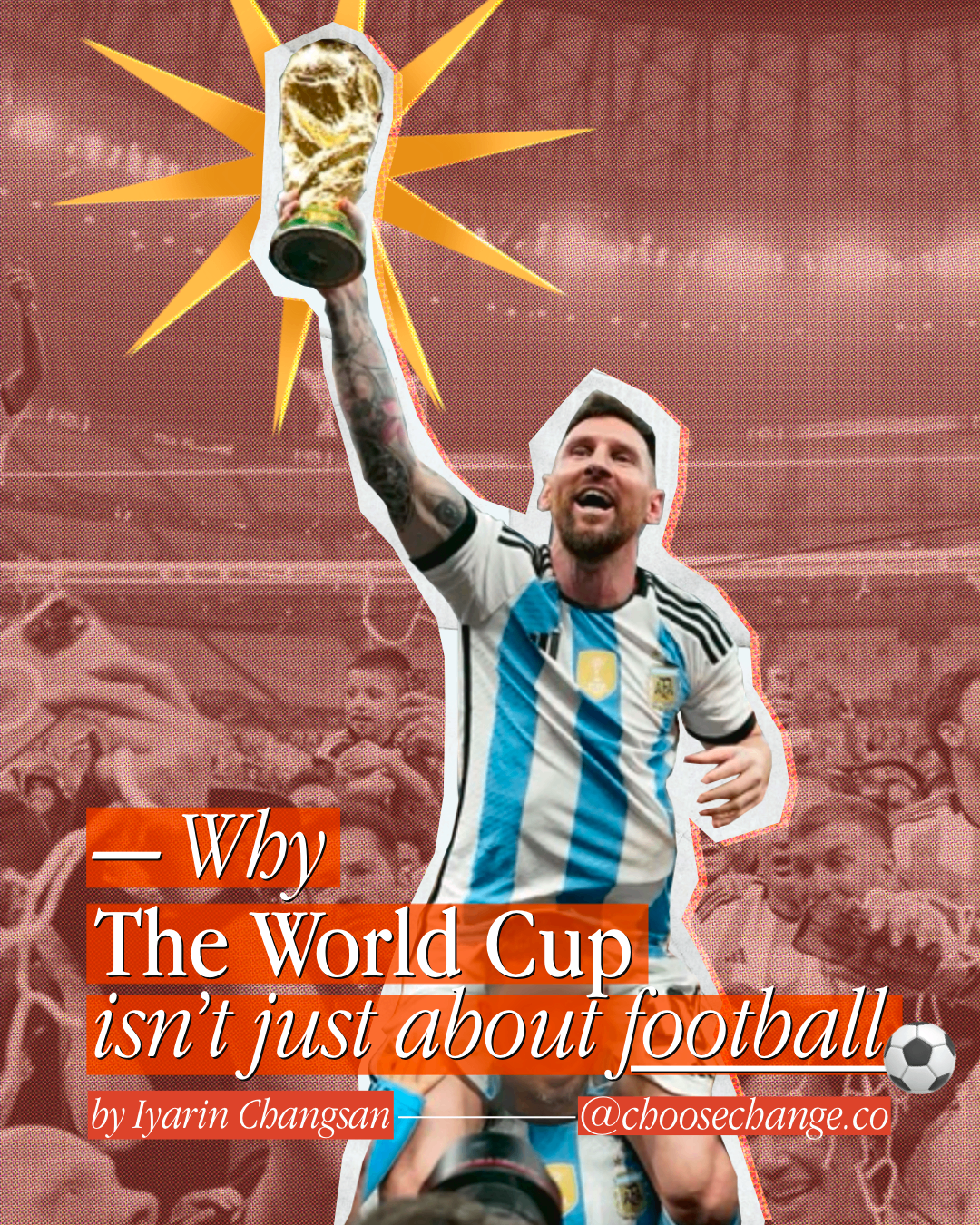
The 2022 FIFA World Cup in Qatar attracted over 5 billion fan engagements across all media platforms. It is one of the most-watched sporting events, with only the Olympics as a close rival. Therefore, the World Cup's influence cannot be confined to the sport but also extends to the audience, politics, and economics.
Money in the World Cup
Let's look at the economics behind the World Cup.
The 2026 World Cup is expected to be the most profitable World Cup ever. Analysts estimated it would generate over USD 8.9 billion from the tournament alone. Compared to the 2022 World Cup, which generated 5.7 billion USD — that is a 56% increase.
What is Sportswashing?
Sportswashing is the use of an athletic event to promote or repair an individual's or group's reputation, especially amid controversy or scandal.
The World Cup is a good example.
The 2022 Qatar World Cup was heavily criticized for sportswashing. The host nation Qatar has faced several controversies, including the mistreatment of foreign workers, human rights, and LGBTQ rights. However, since the World Cup was held in Qatar, they could leverage the positive emotions associated with football to "distract" or "divert" public attention from the tournament itself, allowing people to forget their problematic actions quietly.
The Never Ending Controversies
The 2022 Qatar World Cup was filled with controversy from the start. Firstly, allegations of bribery surfaced, with reports that a FIFA official had accepted bribes to ensure Qatar's bid as the host nation. On top of that, the most notable issue was the mistreatment of migrant workers. Hundreds of thousands of foreign laborers, many of whom were underpaid, were forced to work in extreme heat to build the tournament's infrastructure, and thousands are believed to have died as a result. Moreover, since homosexuality is illegal in Qatar, it has raised critical concerns about the safety of LGBTQ+ players and fans going to Qatar.
The 2026 World Cup, co-hosted by the United States, Canada, and Mexico, also has its own fair share of issues. The U.S. travel ban, even though temporarily exempted for some nations, still fully shuts out fans from Iran and Haiti. Moreover, there have been reports confirming that Immigration and Customs Enforcement (ICE) agents will be present at the games, which have raised serious concerns about the safety of fans from countries with troubled relationships with the U.S. In addition, with tense geopolitical tensions, Iran has been forced to base its team in Mexico and is only allowed to cross the border within 24 hours of each match before departing immediately after. Under these strict conditions, Iranian head coach Amir Ghalenoei commented, stating his team is the most oppressed one in the whole World Cup, with no federation, media, or management present alongside them.
And the list goes on…
What do you think of the World Cup?
Sources
- FIFA – Annual Report 2022
- International Olympic Committee – Paris 2024 final report
- FIFA – World Cup 2026 socioeconomic impact analysis
- FIFA – 2022 financial highlights
- Sports Value – The 2026 FIFA World Cup will be the most lucrative in history
- Baker Institute – Sportswashing: defining, reframing, and measuring its soft power impact
- BBC News – Article c98rzgrv7vmo
- BBC Sport – Article 61635340
- CNN – Qatar World Cup 2022 LGBTQ rights
- Truthout – Iran's soccer team forced to return to Mexico immediately after first game
- Al Jazeera – What the US-Iran peace deal could mean for Iran's World Cup campaign
- The Guardian – Amir Ghalenoei, Iran coach, Mehdi Taremi, FIFA, US World Cup
- The Guardian – World Cup 2026 visa restrictions, referee Omar Artan, Iran officials